CoDEx 2026 Award Opens New Doors for Neurosciences Researcher
Posted Date: July 7, 2026
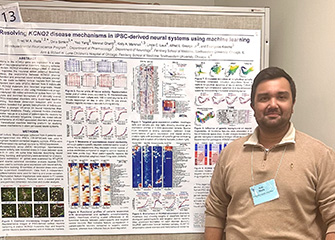
Why did you choose to attend this conference with your award?
Gordon Research Conferences are renowned for being intimate scientific retreats. Unlike massive conferences, these conferences offer a relaxed environment, where researchers share unpublished research and prioritize deep collaboration. My doctoral thesis focuses on the decoding cellular mechanisms of brain diseases using machine learning, and I chose to attend this conference to immerse myself in cutting-edge neuroscience research. I also wanted to connect with pioneers in stem cell and neuroscience research to see how we can translate our lab discoveries into real-world treatments.
What was your level of participation at the conference?
My participation spanned both the Gordon Research Seminar (GRS) and the main Gordon Research Conference (GRC). The GRS is designed specifically for early-career scientists, such as doctoral students and postdoctoral researchers. At the GRS, I was invited to be a presenter, delivering both an oral and a poster presentation. During the subsequent GRC, I presented a poster of my research to a broader audience consisting of senior faculty members.
What did you enjoy most about attending the conference?
The week-long conference was held in a secluded location, which fostered deep collaboration by removing everyday distractions. I had the rare opportunity to engage directly with trailblazers in the field, such as Dr. Timothy Yu from Boston Children’s Hospital, who is pioneering personalized genetic treatments for rare diseases and Dr. Xin Jin from Scripps Research Institute, who develops advanced genetic screening technologies. Beyond meeting these established experts, I deeply valued the time spent bonding with fellow doctoral students and postdoctoral researchers. We shared our experiences, navigated similar research hurdles, and formed collaborative relationships that I know will last throughout our careers.
What was your biggest takeaway?
My biggest takeaway was witnessing the scale of local, national, and international collaborative efforts dedicated to improving the lives of children with neurodevelopmental disorders. In terms of the science, I observed a shift in how we study brain diseases; researchers are increasingly moving away from traditional animal models, like mice, and turning toward organoids, which are lab-grown "mini-brains." These patient-specific tissue models offer a much more complex and translational system for testing potential therapeutics. Furthermore, the conference highlighted a harsh reality—decades of traditional drug discovery have not yielded effective small molecule drugs for many neurodevelopmental disorders. There is now an urgent, collective push towards developing innovative, precision medicine interventions, such as targeted gene therapies.
How, if at all, did your CoDEx 2026-winning poster research relate to this conference?
At CoDEx, my winning poster detailed my work on building a machine learning platform for explaining how mutations in genes encoding ion channel proteins disrupt electrical activity of human brain neurons. Since the conference focused broadly on neurodevelopmental disorders, it perfectly complemented my experimental and computational work. It allowed me to see the broader biological picture, learning how molecular and cellular dysfunction lead to complex neurological conditions. Seeing how other research groups are tackling similar challenges provided inspiration for future directions of my research.
Have you utilized the Northwestern IT Research Computing and Data Services team before, and in what capacity?
Yes, I extensively use resources provided by Research Computing and Data Services. I regularly use Northwestern’s high-performance computing cluster, Quest, to analyze high-dimensional datasets.
Adil’s experience underscores the impact of connecting Northwestern researchers with the tools, funding, and professional opportunities that help advance their work. From presenting award-winning computational research at CoDEx to engaging with leading scientists focused on neurodevelopmental disorders, he returned with new insights, expanded collaborations, and a deeper sense of how data-driven discovery can contribute to future treatments. His story also reflects the role of Northwestern IT Research Computing and Data Services (RCDS) in supporting the complex, high-performance computing needs behind today’s research breakthroughs.
To learn more about the RCDS team and the services they provide, visit the team’s website.